Natural Turf vs Artificial Grass: Costs and Quote Scope
Compare current Australian natural turf and artificial grass supply examples, then check preparation, drainage, installation, maintenance and replacement scope before choosing a quote.
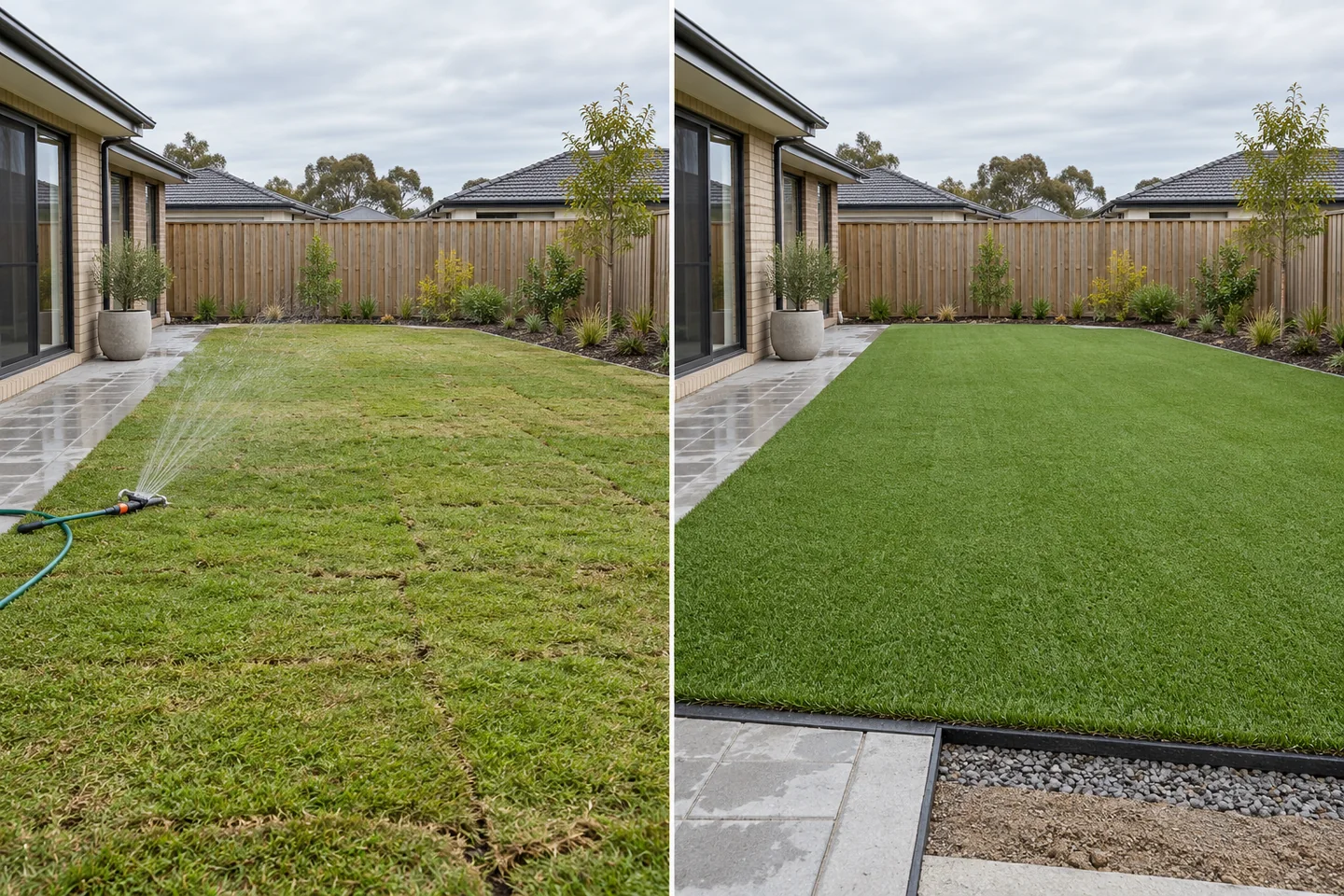
What costs more: natural turf or artificial grass?
The product price alone does not answer the question. Current Australian retail examples checked on 19 October 2026 show one Sir Walter natural turf product at A$14.90 per square metre and two synthetic products at A$15.93 and A$49 per square metre, all GST inclusive. Those are named supply-only products with different purposes, not installed national averages or RealScape estimates.
A South East Queensland turf supplier separately publishes a 100 square metre Sir Walter example of A$2,190 for turf, delivery and laying on prepared ground, or about A$21.90 per square metre, with GST still to be confirmed on the written quote. Removal, soil, levelling and drainage are extra. No current primary artificial-grass installer source was found with enough consistent detail to publish a like-for-like installed comparison, so the final artificial option should come from a site-specific written quote.
Compare the ground preparation before comparing the lawn
Natural turf needs living roots to meet suitable soil. A complete quote may include clearing, weed and old-lawn removal, decompaction, under-turf soil, grading, drainage correction, fertiliser, delivery, laying, rolling and watering-in. Turf Australia says new turf should be laid promptly, watered within 30 minutes, kept damp but not saturated during establishment and protected from heavy traffic for the first month.
Artificial grass is also a built surface rather than a roll placed on any available dirt. Bunnings' DIY guide includes removal and levelling, then a 60-70 mm crushed-rock or gravel layer and mechanical compaction before cutting, joining and fixing the turf. Treat that published method as a consumer example, not a universal specification: the actual base, excavation, drainage, edge detail and fixing system need to suit the site and selected product.
Maintenance is different, not absent
Living turf needs mowing, water and seasonal care, and the variety must suit the yard's sun, shade, wear and climate. Establishment is the most intensive period. Ask the turf grower or installer for written watering, first-mow and feeding instructions, and include any irrigation changes in the quote rather than treating them as free extras.
Artificial grass removes mowing but does not remove upkeep. The Western Sydney University review of public synthetic-turf systems describes regular cleaning, grooming, infill top-ups where used, damage repair and occasional weed or algae control. Residential products and use levels differ, so ask the manufacturer or installer for the exact cleaning, pet-use, heat, drainage, repair and warranty instructions for the proposed system.
Use, shade, pets and summer conditions can decide the better fit
Start with how the space will be used. A family lawn, pet run, shaded side yard, small balcony, pool approach and presentation-only front strip create different wear, drainage, temperature and cleaning needs. The A$15.93 synthetic example is marketed for small areas and temporary uses; it should not be treated as equivalent to a permanent 35 mm landscape product simply because both are sold by the square metre.
Ask to inspect samples outdoors and clarify expected surface behaviour in direct sun. Check pile direction, joins, edge restraint, odour management for pets, water flow, staining, repairs and what happens at the end of the product's service life. For natural turf, confirm variety suitability, root-zone preparation, irrigation access and how worn or shaded areas will be restored.
Drainage, levels and access belong in both quotes
Both options need finished levels that move water safely away from buildings and do not create ponding at paths, fences or garden beds. Victoria's Building and Plumbing Commission warns that landscaping work can interfere with drainage or redirect water flow. A general guide cannot decide the correct falls, legal discharge point, permit position or licensed work for a particular property.
Access can change removal, excavation, delivery and compaction costs. Record the narrowest gate, steps, distance from the truck, finished surfaces that need protection and whether machinery can reach the lawn. Ask who removes spoil, unused rolls, pallets, offcuts and packaging, and who repairs any damaged path, fence or garden edge.
Give every contractor the same lawn brief
Share the same dimensions, current photos, intended use, shade pattern, pet needs, existing surface, known soil or drainage issues, access limits and preferred finish with every business. Ask for itemised fixed scope, stated allowances, GST, exclusions, start window, establishment or maintenance instructions, warranty conditions and a written variation process. Compare the complete installed result, not a turf-roll price against an artificial-grass project total.
A RealScape AI concept can help show where lawn, paths and garden beds are intended to sit, and a free editable quote request can carry that reference into a professional discussion. It is not a measurement, drainage design, product specification, maintenance forecast or construction estimate. Use the checklist below to compare the businesses' written responses yourself.
AI-generated editorial concept comparing natural turf establishment with an artificial-grass direction and visible base cue. It is not a completed customer project, measured design, installation detail or construction estimate.
Natural or artificial lawn quote checklist
- The same measured lawn plan, photos, intended use, sun and shade notes, access width and drainage concerns issued to every business
- Exact natural turf variety or artificial product, pile height, roll width, colour, warranty and any acceptable equivalent
- Existing lawn, weeds, rubble or builder fill removal; excavation depth; spoil volume; cartage, tipping fees and clean-up
- Natural option: under-turf soil, decompaction, grading, fertiliser, laying, rolling, initial watering and establishment instructions
- Artificial option: subgrade treatment, base material and compacted depth, falls, drainage, edging, seams, fixing and infill if specified
- Finished levels at paving, doors, drains, fences and garden beds, plus responsibility for stormwater or licensed drainage work
- Roll layout, joins, trimming and waste allowance, including how awkward shapes and narrow side areas affect material use
- Truck, pallet and machine access, manual handling, protection of paths and buildings, delivery fees and site reinstatement
- Ongoing mowing, watering, feeding and repair for living turf; cleaning, grooming, weed or algae control, repair and eventual replacement for artificial turf
- GST, fixed items, allowances, exclusions, payment stages, start window, weather assumptions, warranty conditions and written variation process
Sources and date checked
- Bunnings — Lawn Solutions Australia Sir Walter buffalo turf - accessed 2026-10-19. Current one-square-metre supply-only price and product description; the displayed store was Orange and availability varies.
- Hancey's Turf — Turf installation cost in Brisbane - accessed 2026-10-19. Supplier-authored, South East Queensland example reviewed 30 September 2026 with turf, laying and delivery separated from site preparation; the source tells customers to confirm GST on the written quote.
- Bunnings — DIY Turf 9 mm ready synthetic turf - accessed 2026-10-19. Current four-square-metre supply-only roll price and intended small-area or temporary uses.
- Bunnings — Luxury Tuff 35 mm synthetic turf - accessed 2026-10-19. Current nine-square-metre supply-only roll and square-metre price for one higher-pile product.
- Bunnings — How to lay synthetic turf - accessed 2026-10-19. First-party DIY installation sequence covering removal, levelling, a 60-70 mm crushed-rock or gravel base, compaction, joining materials and fixings; a professional design may specify a different system for the actual site.
- Bunnings — Online and Special Order Terms of Sale - accessed 2026-10-19. Bunnings states that website product prices are in Australian dollars and include GST; delivery charges and availability can vary.
- Turf Australia — Get Turfed DIY Guide - accessed 2026-10-19. Industry guidance on clearing and preparing the area, laying promptly, initial watering, traffic limits, first mowing and establishment care.
- Western Sydney University — Synthetic Turf in Public Spaces - accessed 2026-10-19. Research review for public synthetic-turf systems, used here only to support the general point that synthetic surfaces still require system-specific cleaning, grooming, infill and repair; it is not a residential installation specification.
- Building and Plumbing Commission Victoria — Landscaping - accessed 2026-10-19. Current Victorian homeowner guidance on landscaping, drainage and water-flow risk, permits, practitioners, contracts and insurance considerations.
- business.gov.au — Prepare quotes - accessed 2026-10-19. Australian Government guidance on clear work descriptions, itemised and total costs, GST, variations, payment terms, dates and quote expiry.
For Australian homeowners, start with a real backyard photo and use an AI concept to explore a practical dream-garden direction. The visual can make style, layout, planting, and material preferences easier to explain before requesting quotes.
Turn the preferred concept into a clearer project brief, find suitable landscapers, and compare scope, inclusions, exclusions, and options against the same visual direction. Homeowner quote requests are free.
The concept is an early planning aid rather than a measured plan or promise of the finished result. Confirm drainage, levels, access, services, permits, engineering, materials, and construction details with the appropriate professionals.