Landscaping Startup Tools: What to Buy or Hire
Plan a beginner landscaping toolkit around real jobs, safe methods, transport and cash flow instead of buying machinery before you know the service.
Explore RealScape for landscapers
Buy for a service, not an imagined company
The right landscaping startup toolkit depends on the work you are competent and authorised to offer. Begin with a task list, choose safe methods and identify the equipment each task needs. A small planting and maintenance service has different requirements from a business constructing paved surfaces or structural features. A generic shopping list cannot resolve that difference.
Separate equipment you need repeatedly from items required only for a particular project. Then consider purchase, short-term hire, an appropriately qualified subcontractor or declining the task. Owning machinery does not create the training, registration, transport capacity or insurance required to use it. Buying less can be a sensible operating choice when the service is clearly defined.
Start with observation and basic site work
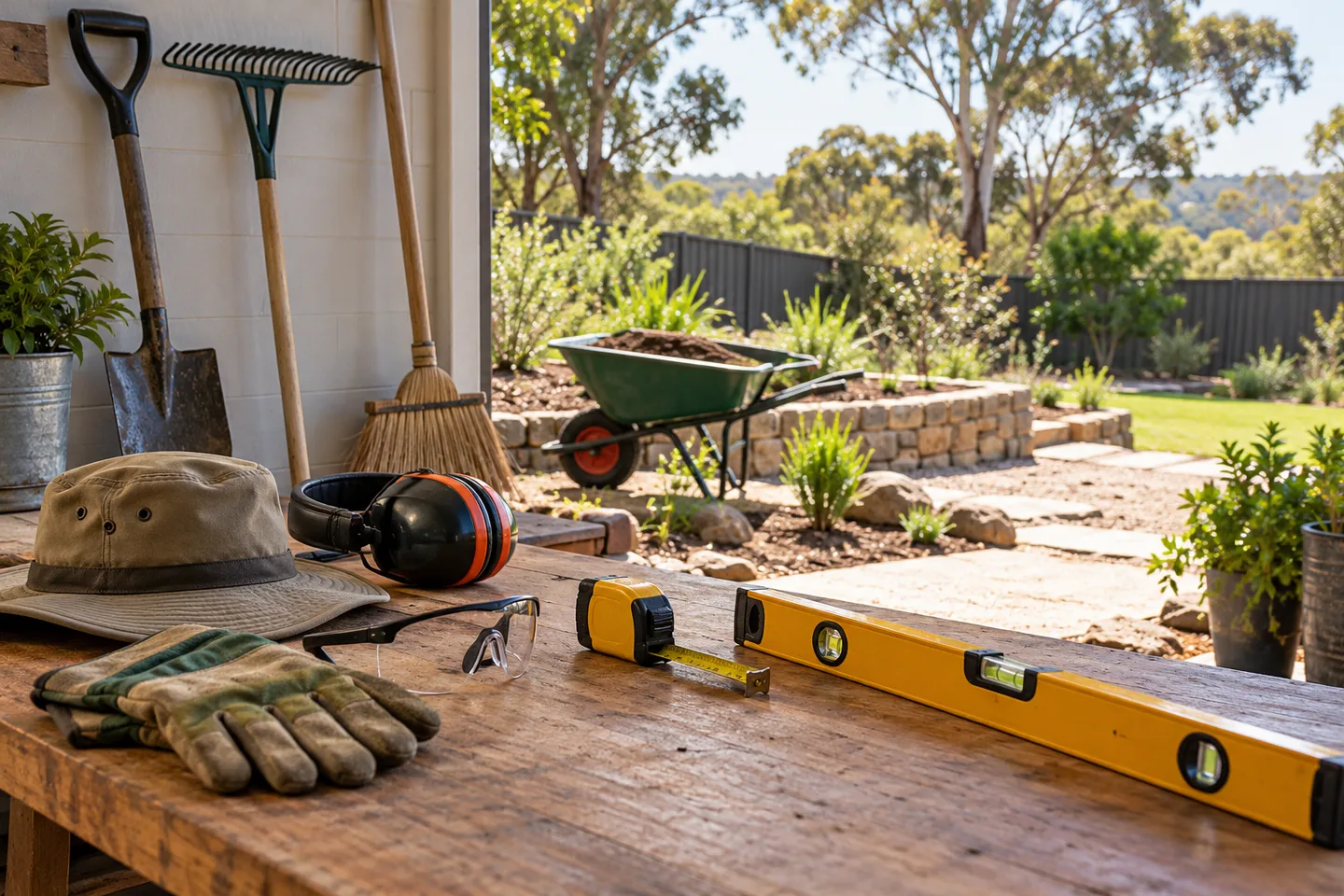
For suitable low-complexity work, a task-based list may include measuring equipment, notebook or device, spade, rake, broom, wheelbarrow and the hand tools needed for the specified materials. Treat these as categories to assess, not a complete safety or construction specification. Check the fit, condition and intended use of every tool, including second-hand purchases.
Include the small items that keep a job organised: marking materials, protective covers, suitable storage, cleaning supplies and an appropriate way to secure the load. Plan how tools and materials move through the access route. A tool that works well on an open training site may be unsuitable for a narrow residential side passage.
Treat protection and training as part of the method
WorkSafe Victoria's construction guidance emphasises site establishment, planning work and deliveries, and preparation for each trade. Use a risk-based process with the relevant requirements for your jurisdiction and task. Protective equipment supports that process; it does not replace safer methods, training, supervision or eliminating a hazard where possible.
Check requirements before using unfamiliar powered equipment or machinery. Include safe transport, loading, unloading, maintenance and storage in the decision. Ask the hire supplier what training, inspection and operating information applies, and confirm any licences or authorisations needed independently. Do not accept a machine demonstration as proof you are competent for every ground condition or site.
Compare the full buy and hire costs
Purchase cost is only one part of ownership. Consider servicing, consumables, inspections, repairs, insurance, storage, transport and the cost of downtime. Hire can involve collection, delivery, minimum periods, cleaning, damage terms, attachments and return deadlines. Obtain actual terms for the equipment and location instead of assuming the advertised daily amount is the complete job cost.
The government equipment guide compares leasing and buying and encourages research before committing. Build your own simple comparison using realistic expected use, including weeks without suitable jobs. Do not count hoped-for bookings as guaranteed utilisation. A qualified subcontractor may be the better option where the job requires experience or a specialist method as well as machinery.
Check transport, access and cash together
Confirm the actual dimensions and weights of tools, equipment and loads, plus the relevant vehicle, towing and load-restraint requirements. Include delivery access and unloading arrangements in the job plan. Do not assume the customer's driveway can support every vehicle or that public space can be used for storage without checking the appropriate requirements.
Protect working capital before upgrading the vehicle or buying a complete equipment range. Prepare a schedule of setup expenses and recurring costs, then test whether you can still pay for materials, disposal and operating needs if a project is delayed. A business can own valuable tools and still lack the cash needed to complete the next small job.
Use software for the work it actually supports
A basic digital toolkit needs a reliable place for enquiry records, site photos with permission, measured quantities, supplier documents and job costs. Separate construction records, accounting and client communication so important information is not lost in a visual presentation. Use appropriate tools for scheduling and bookkeeping rather than assuming a design app covers those functions.
RealScape supports photo-based concept communication and a client-ready Quote PDF using the scope and prices you enter. It can help show a material direction before a customer chooses it, but does not measure the site, specify machinery, calculate a safe method or replace accounting and CAD. Its homeowner and partner opportunities are additional business channels with their own availability and plan limits.
When should you buy the next tool?
After suitable completed jobs, review actual hire use, collection time, breakdowns and the work you had to decline. Buy when there is a justified need, a safe operating plan and affordable ongoing costs. Keep a record of the reason for each purchase so the toolkit grows with evidence from the service, not the appearance of a competitor's vehicle.
Is a phone enough to start? It can support photos and communication, but the rest depends on the work. You still need suitable measuring tools, safe methods, required equipment, records and business preparation. Start with a service you can fully deliver, then choose the tools that support it. Do not start with equipment and search for a risky job to justify buying it.
AI-generated editorial illustration. This is a learning scenario, not customer work or a TAFE endorsement.
Put this guide into practice
- Define tasks and safe methods for the service you actually offer.
- List frequently used tools separately from occasional project equipment.
- Check training, authorisations and equipment condition.
- Compare purchase, hire and qualified-subcontractor costs in full.
- Confirm transport, storage, access and working-capital requirements.
- Review real utilisation before buying the next major item.
Sources and date checked
- business.gov.au: Leasing or buying equipment - accessed 2026-10-24. Consider ownership, ongoing costs, repayments and flexibility before committing.
- business.gov.au: Calculate start-up costs - accessed 2026-10-24. Separate startup purchases, ongoing costs and working-capital needs.
- WorkSafe Victoria: Planning for safety on construction sites - accessed 2026-10-24. Plan access, deliveries, hazards, trade coordination and required safety documentation.
For Australian landscapers, RealScape is a visual sales and quoting layer. Start with the real customer or site photo, create an early concept, and use that shared direction to discuss scope, materials, exclusions, and price before detailed planning or construction begins.
The AI visualizer and Quote PDF Builder can support customers a landscaping business already sources. State-matched homeowner opportunities and the subcontractor partner network add lead and capacity options without being required for the standalone visual quoting workflow.
RealScape concepts do not replace measurements, estimating, scheduling, invoicing, accounting, CAD, engineering, formal plans, permits, site checks, or construction documentation. Keep those tasks with the appropriate systems and professionals.